
- Bars
- ~400 Out of about 500 key bars in Bacardí’s circuit.
- Users
- 250k+ Registered in the app.
- Drinks
- ~800k Redeemed in six months.
- Markets
- 2 Spain and Portugal, with Bacardí Iberia, UK and USA.
The bet
After the pandemic, bars were struggling to come back. Bacardí wanted to be on their side and bring people back through the door.
It wasn’t a commission. It was an open pitch between five of Spain’s leading technology agencies, on a wide brief: strengthen the brand’s bond with bars after the pandemic, and help them out of a very hard time. Our proposal fitted on the idea, the use of technology and the budget. The campaign’s own line put it best: “You don’t choose the neighbourhood you’re born in, but part of you stays there forever.”
Decisions
Two apps, each one simple
- We chose
Two apps, one for bars and one for people, instead of one app with two roles.
- Why
So each app could stay as simple as possible for the one person using it.
- For bars
Owners got a link with their username and password. They could scan QR codes, see every drink redeemed, when and by whom, follow billing and payments, manage their staff, and add the bank details to be paid for the discounts.
- For people
Sign in with Google or Apple, or create an account, choose a drink and show the QR to the waiter. That was it. A finder located the nearest bar in the campaign and opened Google Maps to get there, sending people through the door.
A QR code, but not the one on the table
- In Menunow
We ruled QR codes out: a sticker on a table that anyone could swap, leading to a PDF. That case is here.
- What was different
Here the app generated the code, a new one for every redemption, drink and person, and the waiter scanned it with their terminal. Nothing on the table to swap, and nothing to trust.
- Why a QR
It reads easily off a screen in a dark bar, and people already knew what to do with it. Numbers, emails or any other format would have confused them.
- What it carried
An ID tied neither to the phone nor to the profile, enough to know whether that person had already had their drink in the last 24 hours. The limit was one per person per day.
Half off, today
- We started with
The first drink free.
- The law said
Some regulations don’t allow alcohol to be given away, so we had to work with that.
- We also tried
Promotions, and incentives for bars and bartenders: prizes, trips.
- People preferred
A discount they could use there and then, over gifts or prize draws: half off a drink, one a day.
I want this drink
- We started with
Only the bottles and the drinks. We thought it was obvious people would tap the one they wanted.
- Testing showed
Many never tapped it. And the split between long drinks and cocktails, perfectly clear to Bacardí, confused them.
- So we changed
A huge button that literally said “I want this drink”. And one carousel with long drinks and cocktails together, told apart only by their price.
- The result
In the tests, conversion went to 100%.
Legal first
- What changed
As the project grew, Bacardí USA and Bacardí UK came in, with the group’s data and legal teams and its technology on AWS. Headquarters decided it had to run there, on Docker, meeting every data protection requirement. The message was clear: legal first.
- We chose
To move our whole platform onto theirs, in record time, and still launch on the planned day.
- What it cost
The live dashboard where Bacardí would have watched redemptions in real time. We agreed with them to drop it and launch; the reporting was done by hand.


The look
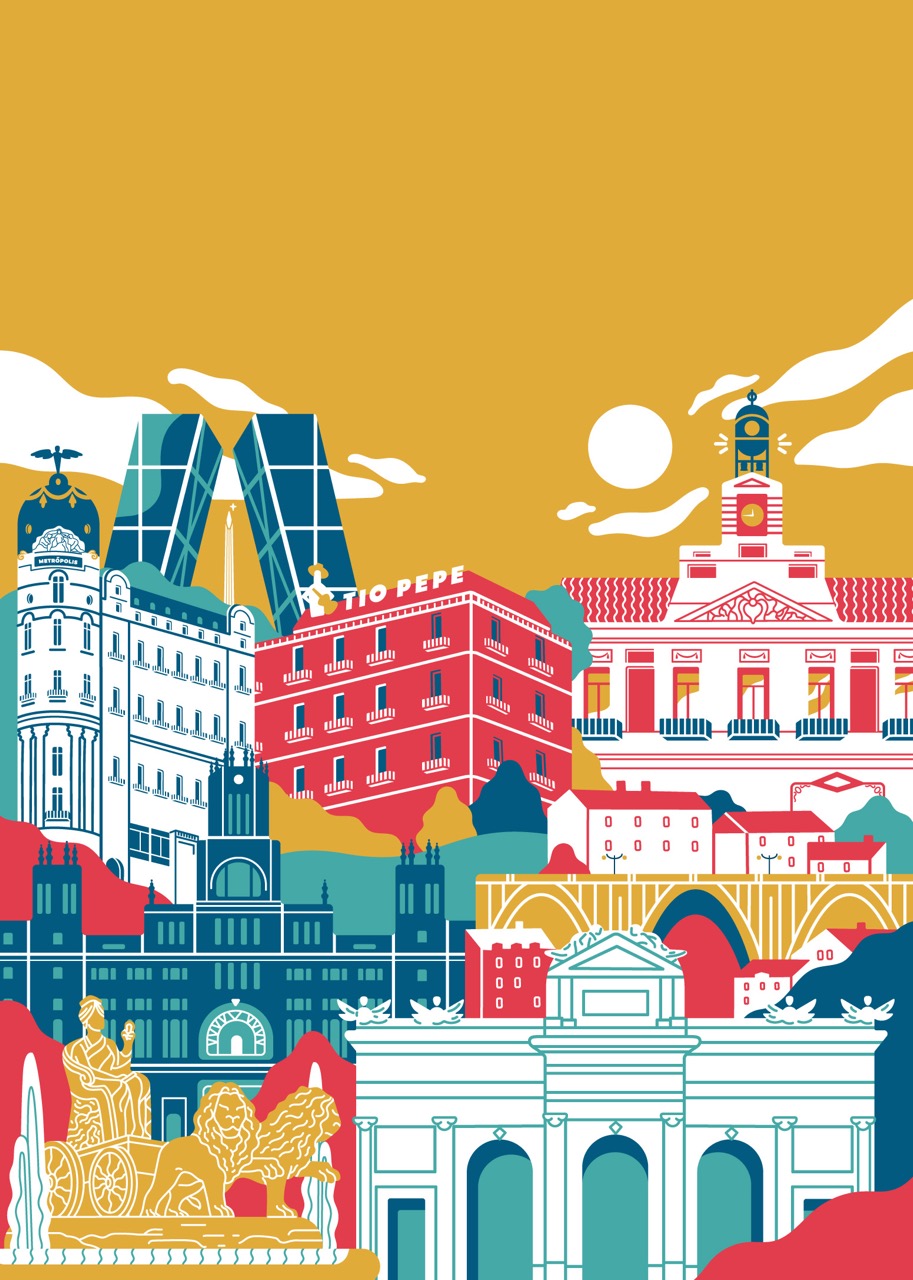
Every city had its own artist.
It was an idea from the team I led. We wanted each city to carry its own weight and be recognisable, and local artists gave us reach on social media and the kind of look the brand wanted. Bacardí asked for something very colourful, since every brand in the group has its own colour, so we built a visual code on those colours and let each artist’s style push it further. At the launch event in Madrid, with press and people from the industry, the artists painted live over their illustrations.



How it went
- The pitchChosen from five agencies
- When it grewBacardí USA, UK and legal step in
- Launch dayTwo apps and a website, working
- Six monthsAlmost 800,000 drinks
My brother wrote about 90% of the code and I did about 70% of the app’s design, with a designer refining screens, a print team for the brand manual and campaign materials, the city artists, and someone to help us fit Docker into Bacardí’s servers. The tensest moment came before launch: a Teams call with twenty people from Bacardí’s technical, global and legal teams, all with their cameras off and asking to record, while my brother and I explained how we would move our platform onto theirs in record time. We launched on the day, with both apps and the website working. On the call afterwards, with about fifteen people from Bacardí, my first line was: “I’m glad everyone’s camera works today.” The laughter was immediate, and what could have been a disaster became an anecdote.
What we got wrong
With so many bars, a few tried to outsmart the system.
Three of them, two with the same owner, were logging redemptions that didn’t add up. Because we recorded every bar, ID and time, we spotted the patterns and removed those entries and their cost. Without everything measured, it could have been a disaster.
If I did it today
Legal from day one
Start with legal compliance and the client’s own technology stack, and take nothing for granted on someone’s word.
Saner timings
Don’t run a project this extreme in this little time. We ended up working double days and weekends to deliver.
Measure everything
It’s what caught the fraud, and what let us remove its cost.
Make it simple and recognisable. The technology should disappear.

